Fragrance Wardrobe: Strategic Perfume Pairing Guide
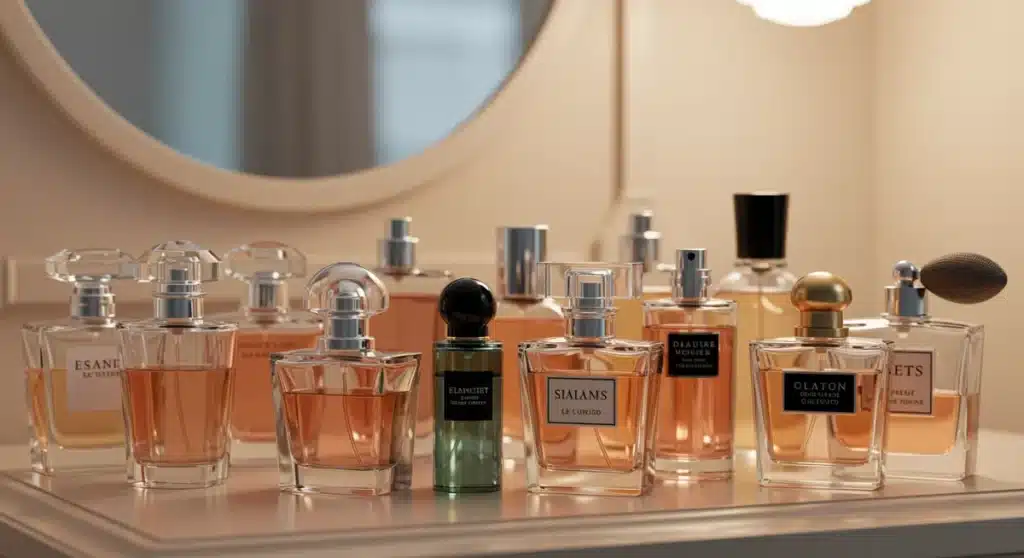
Mastering your fragrance wardrobe pairing involves understanding scent families, occasions, and personal chemistry to strategically select and layer perfumes for a signature scent that evolves with you.
Developing a sophisticated and versatile fragrance wardrobe pairing is an art form, allowing you to express different facets of your personality and adapt to any occasion with confidence. It’s not merely about accumulating bottles, but rather about understanding how to strategically select, combine, and wear scents to create a harmonious olfactory experience.
Understanding your fragrance personality
Before you can effectively build a sophisticated fragrance wardrobe pairing, it’s crucial to understand your own preferences and how different scents resonate with you. This self-discovery is the foundation upon which all successful perfume choices are made, ensuring your selections genuinely reflect who you are and how you wish to be perceived.
Exploring various scent families is an excellent starting point. Do you gravitate towards the warmth of orientals, the freshness of citruses, the romance of florals, or the earthiness of woody notes? Each family evokes distinct moods and can be more suited to certain scenarios than others. Recognizing your innate leanings will significantly streamline your selection process and prevent impulse purchases that don’t align with your core aesthetic.
Identifying your core scent preferences
Consider the types of environments and activities you enjoy. Do you prefer light, airy scents for daytime and work, or are you drawn to richer, more complex aromas for evenings and special occasions? Your lifestyle plays a significant role in shaping your ideal fragrance wardrobe. Thinking about these aspects helps in building a collection that is both diverse and practical.
- Floral: Often associated with femininity, romance, and freshness. Think rose, jasmine, lily of the valley.
- Citrus: Bright, energizing, and clean. Notes like bergamot, lemon, grapefruit.
- Woody: Earthy, warm, and sophisticated. Sandalwood, cedarwood, vetiver are common.
- Oriental: Rich, spicy, and exotic. Vanilla, amber, musk, and spices define this family.
Ultimately, understanding your fragrance personality is an ongoing journey. It involves trying new scents, revisiting old favorites, and paying attention to how perfumes evolve on your skin. This deep understanding will empower you to make informed decisions for your fragrance wardrobe pairing, leading to a collection that truly speaks to you.
Building a versatile base collection
A strong foundation is essential for any well-curated fragrance wardrobe pairing, offering versatility and ensuring you have appropriate options for a wide array of situations. This base collection should comprise a few key scents that can stand alone or serve as excellent layering components, providing a solid starting point for further exploration.
Think of your base collection as the staples in a clothing wardrobe: classic, reliable, and adaptable. These are the scents you can reach for without much thought, knowing they will always perform well. They should represent different scent families, allowing for broad appeal and suitability across various seasons and time of day.
Selecting essential scent categories
To achieve true versatility, aim for a selection that covers at least three distinct scent profiles: a fresh, clean scent; a warm, cozy scent; and a sophisticated, elegant scent. These categories will equip you for almost any social or professional setting, providing a solid framework for your fragrance wardrobe pairing.
- Fresh & Clean: Ideal for daily wear, office environments, and warmer weather. Think aquatic, green, or light citrus notes.
- Warm & Cozy: Perfect for cooler months, intimate gatherings, or when you desire a comforting aura. Vanilla, amber, soft woods.
- Sophisticated & Elegant: Reserved for formal events, special evenings, or when you want to make a lasting impression. Rich florals, chypre, or deeper oriental blends.
Beyond these categories, consider a signature scent that embodies your essence. This fragrance should be one you feel deeply connected to, a scent that others associate with you. It acts as the anchor of your fragrance wardrobe, around which other selections revolve. Building a versatile base collection is the intelligent first step towards truly maximizing your fragrance wardrobe pairing.
Mastering the art of scent layering
Scent layering is where the true magic of a refined fragrance wardrobe pairing comes alive, allowing you to create unique and personalized olfactory experiences that are entirely your own. This technique moves beyond simply wearing a single perfume, encouraging experimentation and creativity to develop bespoke aromas.
Layering involves combining two or more fragrances, or even scented body products, to produce a new, more complex scent profile. The goal is not to overpower but to complement, enhancing certain notes or introducing unexpected twists. Successful layering requires an understanding of how different notes interact and a willingness to experiment.
Effective layering techniques
There are several approaches to scent layering, each offering distinct results. You can layer scents from the same family to intensify a particular note, or combine contrasting families for a more dynamic and intriguing outcome. Starting with lighter scents and applying heavier ones over them often yields the best results.
- Monochromatic Layering: Combining scents within the same olfactive family (e.g., two different floral perfumes) to create depth and complexity while maintaining a cohesive theme.
- Contrasting Layering: Pairing scents from different families (e.g., a fresh citrus with a warm vanilla) to introduce an unexpected dimension and a more unique scent signature.
- Base Layering: Using unscented or lightly scented body lotions, oils, or shower gels as a foundation to prolong the life of your perfume and provide a subtle background aroma.
- Targeted Application: Applying different perfumes to different pulse points, allowing them to blend subtly as they diffuse.
Remember, less is often more when it comes to layering. Start with a light hand and gradually build up your desired intensity. The art of scent layering is a powerful tool in maximizing your fragrance wardrobe pairing, allowing for endless possibilities and a truly personalized approach to perfume.
Strategic pairing for various occasions
The true mark of a sophisticated fragrance wardrobe pairing lies in its ability to adapt seamlessly to any occasion, ensuring your scent always complements the setting and mood. This strategic approach elevates perfume from a simple accessory to an integral part of your overall presentation, reflecting thoughtfulness and attention to detail.
Just as you wouldn’t wear a ball gown to a casual brunch, certain fragrances are better suited for specific environments. Understanding these nuances allows you to make intentional choices that enhance your presence rather than detract from it. It’s about selecting a scent that feels appropriate, comfortable, and impactful for the moment.
Matching scents to social and professional settings
Consider the nature of the event and the impression you wish to make. For professional environments, subtlety and elegance are key, while social gatherings offer more freedom for expression. Special occasions call for something memorable and perhaps a bit more luxurious, making your fragrance wardrobe pairing a powerful tool.
- Office & Daytime: Opt for light, fresh, and clean scents that are unlikely to offend or distract. Think citrus, light florals, or subtle woody notes.
- Casual Outings: This is an opportunity for more relaxed and playful scents. Gourmands, fruity florals, or fresh aquatics can be great choices.
- Evening & Formal Events: Richer, more complex, and long-lasting fragrances are ideal. Orientals, deep florals, or sophisticated woody ambers make a statement.
- Intimate Settings: Choose warm, inviting, and sensual scents that are close to the skin, such as musks, vanilla, or soft spices.
Beyond the occasion itself, also consider the season and weather. Lighter scents often perform better in warmer climates, while heavier fragrances can be more comforting in cooler temperatures. Strategic pairing for various occasions is a cornerstone of an effective fragrance wardrobe pairing, allowing you to always feel perfectly scented.
Seasonal and weather considerations
The impact of seasons and weather on your fragrance wardrobe pairing cannot be overstated. A scent that feels refreshing in summer might be too stark in winter, and a warm, inviting fragrance perfect for autumn could feel stifling on a hot spring day. Adapting your perfume choices to climatic conditions ensures your scent always feels appropriate and performs at its best.
Temperature, humidity, and even the general mood of a season influence how a fragrance projects and evolves on your skin. Lighter molecules evaporate faster in heat, while heavier notes can become more pronounced in cooler air. Being mindful of these factors allows for a more harmonious and enjoyable olfactory experience throughout the year.
Adapting your scents throughout the year
Thinking seasonally helps you rotate your fragrance wardrobe pairing effectively, ensuring each perfume gets its moment to shine. This doesn’t mean you need an entirely new set of perfumes for each season, but rather a thoughtful selection that can be strategically deployed.
- Spring: Embrace rebirth and freshness with light florals, green notes, and crisp citrus. Think delicate and airy compositions.
- Summer: Opt for invigorating and cooling scents. Aquatics, bright fruits, and sparkling citruses are perfect for warm weather.
- Autumn: Transition to warmer, cozier aromas. Spices, woods, amber, and gourmand notes complement the changing leaves and cooler air.
- Winter: Rich, opulent, and long-lasting fragrances come into their own. Deep orientals, heavy woods, and intense vanilla or musk-based scents provide warmth and comfort.
Humidity also plays a role; in humid conditions, scents can project more strongly, so a lighter application might be necessary. Conversely, in dry conditions, fragrances may dissipate faster, requiring a slightly more generous spray. Considering seasonal and weather factors is a sophisticated element of managing your fragrance wardrobe pairing, ensuring your scent is always in perfect harmony with your surroundings.
The role of personal chemistry
Personal chemistry plays an often-underestimated yet profoundly significant role in how any fragrance wardrobe pairing truly translates on an individual. What smells divine on a test strip or a friend might evolve completely differently on your skin, creating a unique and sometimes unexpected olfactory signature.
This phenomenon is due to a complex interplay of factors, including your skin’s pH level, oiliness, diet, body temperature, and even your unique genetic makeup. These elements interact with the chemicals in a perfume, altering its projection, longevity, and the way individual notes are perceived. Understanding your personal chemistry is vital for truly maximizing your fragrance wardrobe pairing.
How skin chemistry impacts scent
Your skin acts as a living canvas for fragrance, and its characteristics dictate how a perfume will unfold. For instance, oily skin tends to hold fragrance longer and can intensify certain notes, while dry skin might cause scents to dissipate more quickly. The natural warmth of your skin also influences how quickly a fragrance develops, releasing its top, middle, and base notes.
- Skin pH: Variations in skin acidity can subtly alter the perception of scent notes, making some appear sweeter or more acidic.
- Body Temperature: Higher body temperatures can accelerate the evaporation of perfume, leading to a stronger initial projection but potentially shorter longevity.
- Skin Oiliness: Natural skin oils can bind with fragrance molecules, enhancing their staying power and sometimes deepening their aroma.
- Hormonal Changes: Fluctuations due to menstrual cycles, pregnancy, or medication can temporarily affect how a perfume interacts with your skin.
The best way to understand your personal chemistry is through direct application. Always test a new fragrance on your skin and allow it to develop over several hours before making a purchasing decision. This ensures that your chosen scents truly harmonize with your body, making your fragrance wardrobe pairing an authentic extension of yourself.
Maintaining and storing your collection
Proper maintenance and storage are fundamental to preserving the integrity and longevity of your fragrance wardrobe pairing. Perfumes are delicate compositions, susceptible to degradation from environmental factors. Neglecting their care can lead to changes in scent, color, and overall quality, diminishing the investment you’ve made.
Just like fine wine, fragrances require specific conditions to age gracefully and maintain their intended aroma. Understanding these requirements will ensure that each bottle in your collection remains as captivating as the day you first opened it, ready for any occasion you choose to pair it with.
Best practices for perfume preservation
The primary enemies of perfume are light, heat, humidity, and air exposure. Protecting your bottles from these elements is crucial for extending their shelf life and ensuring their olfactive profile remains true. A little attention to storage can make a significant difference in the lifespan of your cherished scents.
- Keep them in the dark: Direct sunlight and even bright artificial light can break down fragrance molecules. Store perfumes in their original boxes or in a dark cabinet.
- Maintain a cool, stable temperature: Extreme temperature fluctuations are detrimental. Avoid storing perfumes in bathrooms, where heat and humidity from showers can cause rapid degradation. A cool, dry bedroom drawer is often ideal.
- Minimize air exposure: Always replace caps tightly after use. Air exposure, especially over long periods, can oxidize the fragrance, altering its scent.
- Avoid shaking bottles: While it might seem intuitive, shaking a perfume bottle introduces air and can disrupt the delicate molecular structure of the scent.
By adhering to these simple yet effective storage guidelines, you can significantly prolong the life and quality of your fragrance wardrobe pairing. This careful approach ensures that your perfumes are always ready to delight, providing consistent performance and true representation of their intended aroma.
| Key Aspect | Brief Description |
|---|---|
| Scent Personalization | Understanding your own preferences is key to building a fragrance collection that truly reflects your identity. |
| Strategic Layering | Combine scents to create unique, complex aromas, enhancing depth and personal expression. |
| Occasion Matching | Select fragrances that complement the specific setting, mood, and formality of an event. |
| Proper Storage | Store perfumes correctly to protect their integrity, extending their life and preserving scent quality. |
Frequently Asked Questions About Fragrance Pairing
▼
Begin by identifying your core scent preferences across different families like fresh, floral, or woody. Invest in 2-3 versatile base scents suitable for various occasions, then gradually expand. Focus on quality over quantity and how scents complement your personal style.
▼
Absolutely! Layering perfumes from different brands is encouraged for unique scent creation. The key is to understand the notes and how they interact. Start with lighter scents first, then apply heavier ones. Experiment with complementary notes like a citrus over a vanilla base.
▼
For office settings, opt for subtle, clean, and non-overpowering fragrances. Light florals, fresh citrus, or delicate woody scents are excellent choices. Avoid heavy gourmands or overly strong oriental notes, which might be distracting or offensive to colleagues.
▼
Skin chemistry significantly impacts how a perfume smells and lasts. Factors like pH, oiliness, and body temperature can alter notes and projection. Oily skin often prolongs scent, while dry skin might cause faster evaporation. Always test perfumes on your skin for an accurate perception.
▼
Store perfumes in a cool, dark, and dry place, away from direct sunlight, extreme temperatures, and humidity. Keep them in their original boxes or a cabinet. Avoid storing them in bathrooms. Proper storage prevents degradation and preserves the fragrance’s original quality and scent profile.
Conclusion
Crafting a thoughtful fragrance wardrobe pairing is an empowering journey that transcends mere scent application; it’s about curating an olfactory extension of your identity. By understanding your personal preferences, strategically building a versatile collection, mastering the art of layering, and considering the nuances of occasion, season, and personal chemistry, you unlock the full potential of your perfumes. Proper storage ensures your cherished scents remain vibrant, allowing you to confidently express yourself through fragrance for every moment life offers.