Avoiding Scent Clashes: Your 2026 Perfume Pairing Guide
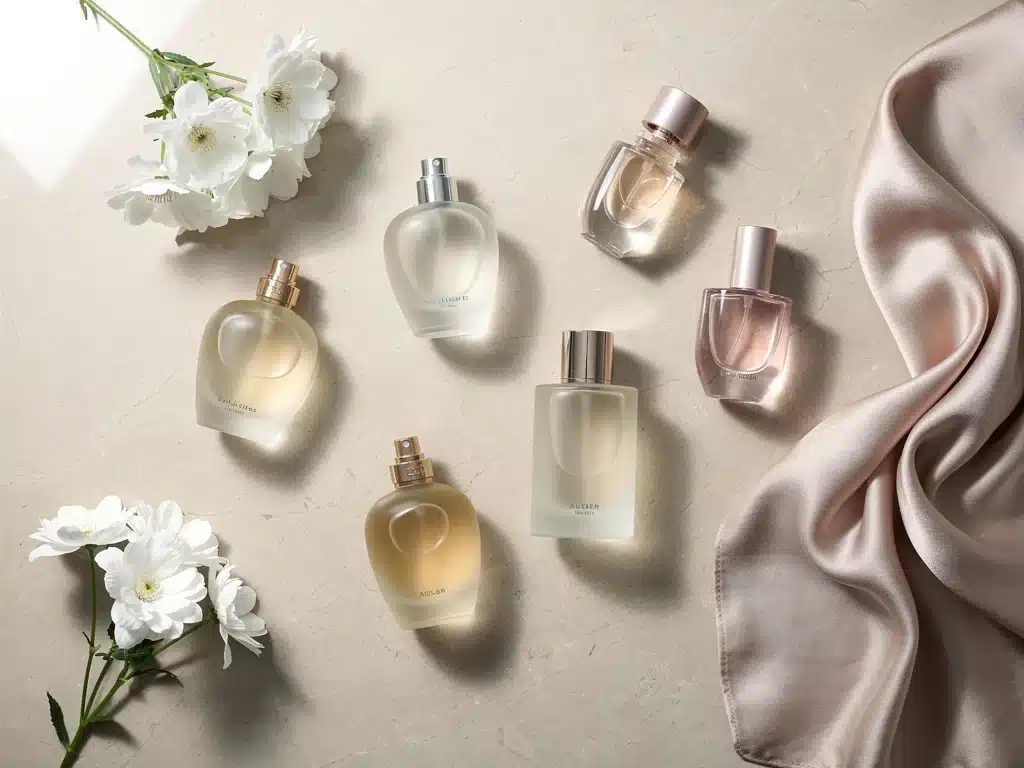
This comprehensive guide offers a perfume pairing in 2026, helping fragrance enthusiasts combine scents more intentionally. Learn how intensity, fragrance families, application, testing, and personal preference can shape a balanced layering experience.
Perfume Pairing offers a practical framework for combining fragrances without turning personal experimentation into a rigid set of rules.
The art of perfume layering is fundamentally personal, and combinations that work beautifully for one wearer may feel completely different to another.
Understanding families, intensity, application, and fragrance development can make experimentation easier while leaving enough freedom to discover combinations that genuinely match your own preferences.
Understanding Fragrance Families for Harmonious Blending
Successful perfume pairing can begin with an understanding of fragrance families, which group perfumes according to their dominant olfactory characteristics.
Common classifications include fresh, floral, woody, gourmand, chypre, fougère, and amber or ambrée, although fragrance experts do not use one universally identical system.
Families provide useful orientation, but they should not be treated as strict compatibility rules because individual notes, concentration, and composition also influence how fragrances combine.
Identifying Your Core Scent Profile
Start by identifying the fragrance styles and notes you repeatedly enjoy, such as citrus, rose, vanilla, woods, musk, aromatic herbs, or warm amber accords.
This personal pattern can serve as a useful starting point when selecting another fragrance, especially if both compositions share or complement one recognizable element.
Intensity also matters, so compare how strongly each fragrance projects and how long it remains noticeable before deciding how much of each one to apply.
Exploring Complementary Notes
Some combinations are commonly used because their characteristics create contrast or continuity, but no pairing is guaranteed to smell harmonious to every wearer.
Citrus can brighten woody or floral fragrances, while vanilla, musk, sandalwood, or amber-style notes can add warmth and softness to sharper compositions.
Testing remains more reliable than following a chart alone, because the complete formulas may behave differently from what their listed headline notes suggest.
- Citrus & Green: Fresh combinations that can create a bright, crisp impression.
- Floral & Woody: Florals can gain warmth and structure from woods.
- Amber & Spicy: Warm, resinous, and spicy notes can create richer combinations.
- Gourmand & Vanilla: Sweet notes can reinforce a cozy, dessert-like profile.
The 5-Point Checklist for Perfume Pairing Success
This 5-point checklist provides a simple method for experimenting with perfume pairing while avoiding unnecessary complexity or excessive fragrance application.
The objective is not to follow one perfect formula, but to understand how intensity, scent character, location, quantity, and development influence the final result.
Begin with two fragrances rather than several at once, then adjust gradually after observing how the combination develops on your skin or clothing.
Point 1: Assess Scent Intensity and Longevity
Compare the strength of both fragrances before applying them, since a powerful parfum can easily dominate a lighter eau de toilette or cologne.
There is no universal requirement to apply the strongest fragrance first; some layering approaches actually begin with lighter scents before adding deeper ones sparingly.
The safest method is to test both orders in small amounts and choose the version that produces the balance and development you personally prefer.
Point 2: Choose Complementary Notes, Not Competing Ones
Shared notes can provide an easy bridge between two perfumes, such as rose with musk, citrus with woods, or vanilla with warm amber accords.
Contrasting fragrances can also work, so difference alone does not create a clash; the real question is whether the finished combination remains pleasant and balanced.
When both perfumes are dense and highly projecting, use smaller amounts because intensity can become overwhelming even when their notes are theoretically compatible.
Point 3: Strategic Application Points
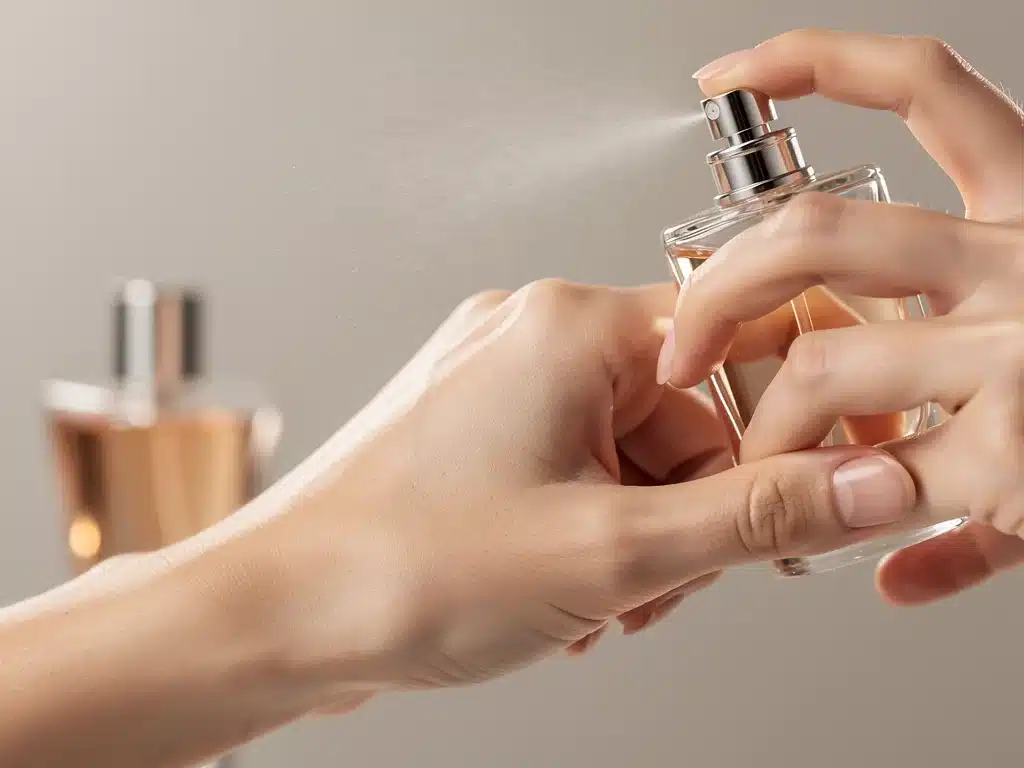
Applying fragrances to different areas can reduce direct mixing and allow each scent to remain somewhat distinct while still contributing to the overall scent trail.
You might place one fragrance on the neck and another on the wrists, or test them separately before deciding whether direct layering produces a better result.
Perfume can also be applied to clothing, but some formulas may stain delicate fabrics, so test an inconspicuous area or follow the fragrance maker’s guidance.
Point 4: Less is More – Start Small
Begin with one light spray of each fragrance because adding more is much easier than correcting an overly strong combination after application.
Give the first fragrance a little time to settle before judging the combination, since the initial alcohol evaporation can temporarily distort the scent.
Once you understand the balance, increase only the fragrance that needs more presence rather than automatically adding equal amounts of both perfumes.
Point 5: Test and Adjust Over Time
Fragrances change during wear as more volatile top notes fade and longer-lasting heart and base materials become increasingly noticeable.
Temperature, skin condition, application amount, humidity, and activity can also influence projection and longevity, making several hours of testing especially useful.
Keep simple notes about combinations you enjoy, including the products, number of sprays, application areas, and how the blend develops during the day.
Common Pitfalls in Perfume Pairing and How to Avoid Them
One of the easiest ways to create an unpleasant perfume combination is to apply too much fragrance before understanding how the scents interact.
Another mistake is assuming fragrances from the same family automatically work together, even though their complete formulas may contain very different dominant materials.
Testing gradually allows you to identify whether the problem comes from the combination itself, excessive quantity, application order, or simply personal preference.
Over-Layering: The Muddled Scent Syndrome
Using several strong perfumes simultaneously can make individual notes difficult to distinguish and create a dense scent cloud that overwhelms the wearer.
Starting with two fragrances makes it easier to understand exactly what each scent contributes and which element should be increased or reduced.
Complexity does not necessarily require more bottles; two thoughtfully selected fragrances can create substantial depth while remaining clearer and easier to control.
Ignoring Seasonal and Occasional Suitability
Temperature can influence fragrance performance, with warm weather often increasing diffusion and making heavier combinations feel stronger than expected.
Cooler conditions can make some fragrances seem quieter, which may make richer woods, spices, gourmand notes, or amber-style compositions feel more comfortable.
Occasion also matters, because a combination suitable for an outdoor evening may feel intrusive in a small office, classroom, restaurant, or shared vehicle.
The Future of Fragrance: Innovations in Scent Pairing 2026
Fragrance companies increasingly use data, algorithms, and artificial intelligence to support perfume development, consumer research, and recommendation systems.
In 2026, companies such as dsm-firmenich and IFF publicly describe AI-assisted approaches that analyze large fragrance and consumer-response datasets during development.
These technologies are significant, but they should not be interpreted as algorithms that can perfectly predict how every perfume combination will smell on one individual.
Personalized Scent Algorithms
Digital scent finders already recommend fragrances according to preferences, desired effects, existing favorites, or responses to guided questions about scent characteristics.
Industry AI can also identify patterns across consumer tests and ingredient combinations, supporting perfumers and companies when developing or evaluating fragrance concepts.
Claims that an app can precisely calculate ideal layering from someone’s unique body chemistry remain more speculative and should be treated cautiously.
Modular Fragrance Systems
Modular fragrance concepts are already available, with some collections intentionally designed so individual scents can be worn alone or combined together.
Jo Malone London and Experimental Perfume Club, for example, openly encourage consumers to combine selected fragrances to create personalized variations.
These systems simplify experimentation because the perfumes may be developed with layering in mind, although wearers can still experiment with unrelated fragrances.
Beyond the Checklist: Cultivating Your Olfactory Palette
A checklist can make perfume pairing easier, but experience develops primarily through repeated smelling, comparison, testing, and attention to how fragrances evolve.
Learning common materials such as bergamot, rose, jasmine, sandalwood, vetiver, vanilla, patchouli, or musk can make fragrance descriptions easier to understand.
Over time, familiarity helps you recognize patterns you enjoy and reduces dependence on generalized lists of combinations created for other people’s preferences.
Training Your Nose for Nuance
Smelling individual materials or simple fragrance compositions can make it easier to recognize familiar characteristics when they appear inside more complicated perfumes.
Use blotters to compare fragrances side by side, then test promising options on skin because the wearing experience can differ from paper.
Take breaks between samples, especially when testing many perfumes, because olfactory fatigue can make scents increasingly difficult to distinguish accurately.
Embracing Experimentation with Confidence
Once you understand basic fragrance families and intensity, experimentation becomes more useful than trying to obey fixed rules about what must be combined.
Unexpected contrasts can be enjoyable, and major fragrance brands themselves often describe scent pairing as a creative exercise rather than a rigid formula.
Your own perception ultimately determines whether a pairing succeeds, so use expert guidance as a starting point rather than a final verdict.
The Art of Balance: Mastering Subtle Layering
Balanced layering involves controlling intensity so that two fragrances contribute recognizable qualities without one combination becoming unnecessarily overwhelming.
That balance can come from using fewer sprays, combining different concentrations, or placing fragrances on separate areas instead of directly stacking them.
The ideal result is subjective: some people prefer seamless blends, while others enjoy detecting distinct fragrances at different moments during wear.
Building a Scent Wardrobe for Every Mood
A scent wardrobe can contain fragrances suited to different settings, temperatures, moods, or styles rather than relying on one bottle for every situation.
Versatile base fragrances such as musks, woods, citrus, or soft vanillas may be easier to experiment with because they can complement many compositions.
You can then introduce more distinctive florals, spices, gourmands, or aromatic fragrances when you want a combination with greater personality or contrast.
The Impact of Environment on Perfume Pairing
Environmental conditions influence evaporation and diffusion, meaning the same perfume pairing can perform differently depending on temperature and surrounding conditions.
Heat often increases projection, making strong combinations more noticeable, while cooler temperatures can make certain fragrances appear softer or slower to develop.
Indoor setting matters too, because heavily projecting perfumes can become intrusive in confined spaces even when the combination smells pleasant to the wearer.
Adapting to Climate and Season
Fresh citrus, green, aromatic, or lighter floral combinations are often comfortable in warm conditions because they can feel less dense during higher temperatures.
Woody, gourmand, spicy, and amber-style combinations are frequently associated with cooler seasons, although these are preferences rather than strict seasonal rules.
Adjusting the number of sprays can matter as much as changing fragrance families, especially when moving between outdoor heat and climate-controlled indoor spaces.
Curating Your Signature Scent Combinations for 2026
A signature combination can simply be a pairing you repeatedly enjoy rather than a blend that follows current fragrance trends or receives outside approval.
Record combinations that work reliably across different situations so you can reproduce them without having to experiment from the beginning every time.
You may eventually create several signatures for different seasons, occasions, or moods while maintaining recognizable notes that connect your overall fragrance wardrobe.
Developing Personal Preference and Confidence
Individual preference matters more than universal compatibility charts because fragrance enjoyment depends strongly on perception, associations, memories, and personal taste.
Skin temperature, hydration, application amount, and environment can influence performance, so always test combinations on yourself before judging the final result.
Once you understand conventional pairing suggestions, feel free to break them whenever an unconventional combination produces a scent you genuinely enjoy.
Maintaining Scent Integrity and Shelf Life

Proper storage helps fragrances maintain their intended character, which is particularly important when you depend on predictable performance for repeated layering combinations.
Heat, air, and strong light can accelerate fragrance deterioration, potentially altering color, freshness, or the overall balance of the composition over time.
Check older bottles periodically and compare them with your memory of the fragrance, especially if the scent has changed noticeably after prolonged storage.
Optimal Storage Conditions
Keep fragrance bottles tightly closed and away from direct sunlight or major heat sources, ideally in a consistently cool and relatively dark location.
Original boxes can provide additional protection from light, particularly when bottles are stored on open shelving in bright rooms.
Bathrooms may experience repeated temperature and humidity changes, so a bedroom drawer, closet, or cabinet is generally a more stable storage location.
| Key Point | Brief Description |
|---|---|
| Fragrance Families | Use scent families as guidance while remembering that classifications are not universal rules. |
| Intensity & Longevity | Balance application according to strength instead of assuming one mandatory layering order. |
| Strategic Application | Test skin, separate application areas, or clothing carefully while watching for fabric staining. |
| Test & Adjust | Observe how combinations develop over several hours before deciding whether they work. |
Frequently Asked Questions About Perfume Pairing
Applying too much fragrance too quickly is a common problem. Begin with small amounts, especially when combining two powerful perfumes, and increase only after seeing how they develop together.
Yes. Fragrances do not need to come from the same brand to be layered successfully. Test the combination gradually and judge it according to scent, strength, and personal preference.
Test small amounts on blotters or separate areas first. If the combination becomes overwhelming, unpleasant, or loses the qualities you enjoy in both perfumes, adjust the amount or pairing.
Both approaches are possible. Skin allows fragrances to develop during wear, while clothing may hold scent differently. Test delicate fabrics first because some perfume formulas can cause stains.
Apply fragrance to comfortable areas of clean skin and consider unscented moisturizer if dryness affects performance. Longevity depends on the formula, concentration, application amount, environment, and individual wear.
What this means
The evolving landscape of perfume pairing reflects a broader interest in personalization, experimentation, fragrance wardrobes, and combinations tailored to individual preference.
Digital recommendation tools and AI are becoming more visible within the fragrance industry, while layering-focused collections already give consumers structured ways to experiment at home.
The most reliable approach remains simple: start small, test over time, protect your fragrances, and choose combinations because you enjoy them rather than because a rule says they should work.